
The Meaning of Civilization
Earth AbidesThis flow follows the novel’s debate over whether civilization is a desired achievement, a system imposed by pressure, or a fragile inheritance that may not return.
increasing Bearing strength in each event
 decreasing
Bearing strength in each eventdecreasingA Scholar Looks for Recovery
A Scholar Looks for Recovery
Catastrophe as a question
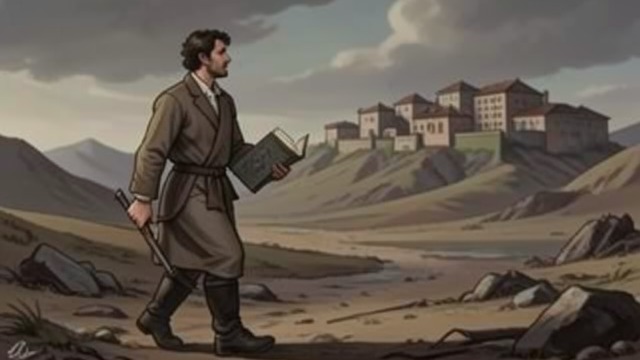
Isherwood Williams observes that the disease has removed people with less damage to buildings than he expected. He wonders what the remaining systems and surviving individuals might make possible.
A hope of reconstruction
He initially imagines that civilization might resume once survivors find one another. That confidence shapes his early search for communities and his later concern about books and skills.
A Life Outside the City
A Life Outside the City
Learning to produce
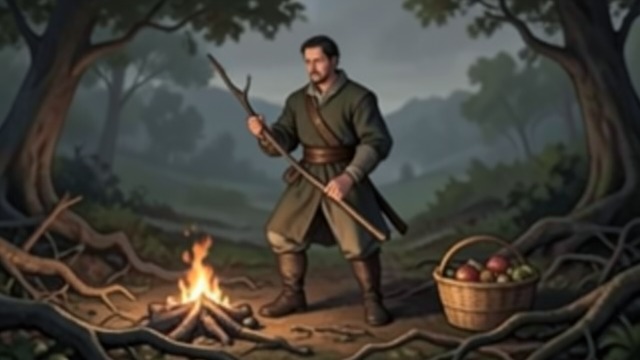
Hunting, gathering, and cooking fresh food move Isherwood Williams away from a purely scavenged existence. He begins to feel that making something from the land is different from opening another can.
A challenge to old values
The contrast with the Arkansas survivors makes him reconsider who has adapted best. A life with fewer goods may be more stable when the systems of the Old Times no longer function.
The Tribe Stalls
The Tribe Stalls
Comfort in leftovers
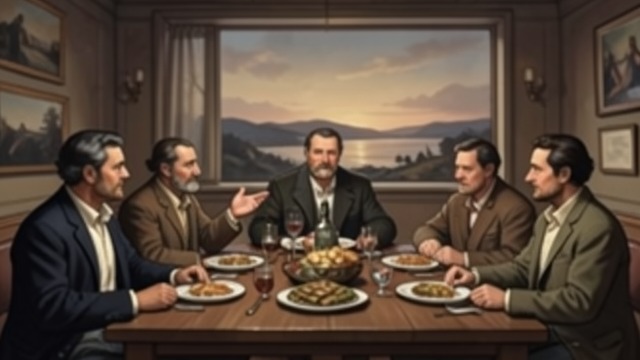
The Tribe has food, shelter, and familiar routines, so it does not urgently rebuild agriculture, transport, or technical production. Isherwood Williams repeatedly warns that supplies will not last forever.
Desire is not enough
His speeches fail because the community’s immediate needs are met. The novel distinguishes the ability to imagine a future from the collective pressures that make people act toward it.
The Bow as a Smaller Beginning
The Bow as a Smaller Beginning
A practical inheritance
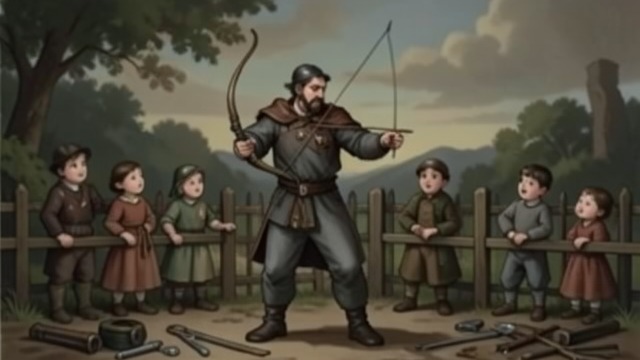
Isherwood Williams teaches the children to make bows using simple materials. The activity combines play, craft, and a skill that will remain useful after ammunition fails.
Progress without restoration
The bows do not restart industrial civilization. They give the community a durable capacity suited to its actual world, suggesting that adaptation may matter more than recreating old machinery.
The Future Without a Promise
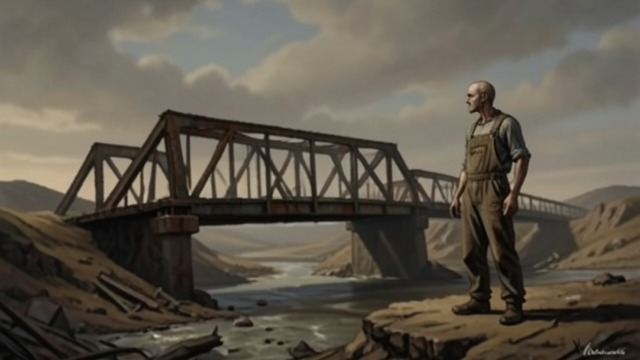
The Future Without a Promise
Civilization’s achievements endure briefly
The bridge still stands as Isherwood Williams dies, but he knows rust and earthquakes will eventually bring it down. Its grandeur does not guarantee the return of the society that built it.
Another way of living
He does not wish for the old cycle of conquest and oppression to repeat unchanged. The future belongs to The Tribe, whose path may be poorer in technology yet differently adapted to the world.
In the first days after Isherwood Williams learns of the plague
During his journey across the continent
In the years before the water crisis
After the Year 22 epidemic
As Isherwood Williams dies on the bridge
